
Source: Press Information Bureau (PIB), Government of India — Ministry of Jal Shakti · PIB Delhi · Read the original release on pib.gov.in
- For the first time, 'Har Ghar Jal' certificates were issued in regional languages to Gram Panchayats through 'Jal Arpan' module
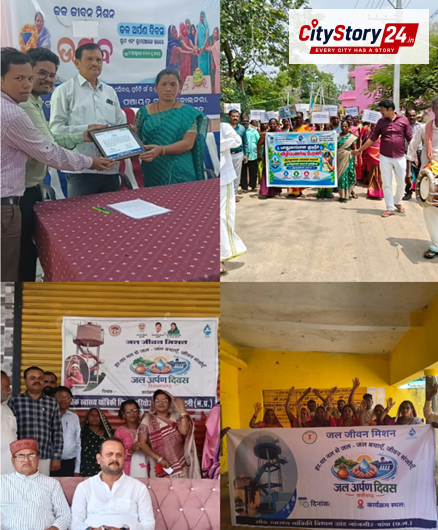
On the occasion of Gandhi Jayanti and special Gram Sabhas organized in States/UTs, more than 1,850 Gram Panchayats/villages participated in the ‘Jal Arpan’ programme. This is a significant reform under the ‘Jal Jeevan Mission 2.0’, which hands over control of rural drinking water systems to communities. Under this, the completed rural water supply schemes were formally handed over to the Gram Panchayats and Village Water and Sanitation Committees (VWSC). The move reflects a shift in mission to make drinking water services managed in a community-led and sustainable manner.
For the first time, the ‘Jal Arpan’ module also facilitated the issuance of ‘Har Ghar Jal’ certificates in regional languages for eligible Gram Panchayats and villages. 346 ‘Har Ghar Jal’ certificates were generated and issued in regional languages for eligible Gram Panchayats and villages. This makes the certification process more accessible and citizen-centric and also strengthens community ownership of drinking water services. The ‘Jal Arpan’ module now has the facility to issue ‘Har Ghar Jal’ certificates in Hindi, English and 17 other regional languages including Assamese, Bengali, Bodo, Gujarati, Kannada, Kashmiri, Konkani, Malayalam, Manipuri, Marathi, Nepali, Odia, Punjabi, Sanskrit, Tamil, Telugu and Urdu, allowing communities to access program information and certificates in their own languages.
Gram Panchayats, Village Water and Sanitation Committees, frontline workers, women volunteers and community members from across rural India actively participated in the ‘Jal Arpan’ programmes. Successfully commissioned rural water supply schemes after the stipulated pre-trial period were formally handed over to the Gram Panchayats and VWSCs for operation, maintenance and long-term sustainability. Programs like Jal Sankalp, Jal Bandhan, demonstrations of water quality testing using Field Test Kit (FTK), awareness programs and felicitating those who have contributed to the community were organized in many villages. Activities related to water quality monitoring and post-monsoon quality testing of water sources were also conducted to ensure safety and reliability of drinking water services in the States and Union Territories. Community-led water quality monitoring is being strengthened through active participation of women.
Under Jal Jeevan Mission 2.0, digital governance and asset management is being strengthened through ‘Sujalam Bharat’, in which water supply assets and sources of piped water supply are being geo-tagged. On the same occasion, 2691 water supply assets including around 700 sources were geo-tagged across the country. These efforts are supporting better well construction, monitoring and long-term sustainability of rural water supply systems, as well as creating a comprehensive digital inventory of drinking water assets.
In the country's journey to become water self-reliant, so far more than 15.96 crore rural households – constituting more than 82% of the country's rural households – have received tap water connections under the Jal Jeevan Mission. To bring transparency, accountability and real-time monitoring in this process, the Department of Drinking Water and Sanitation has developed a special ‘Jal Arpan’ digital module under Jal Jeevan Mission. This module gives a systematic digital record of scheme transfers and helps in Gram Panchayat-based management of rural drinking water systems. The Government of India is committed to working closely with States, Union Territories, Gram Panchayats and local communities to ensure every rural household has access to safe, adequate and reliable drinking water services.
The event of ‘Jal Arpan’ echoes Mahatma Gandhi’s vision of community participation, local self-governance and collective responsibility, with Gram Panchayats and rural communities playing a key role in maintaining drinking water services and ensuring long-term water security.
This is the official press release issued by the Press Information Bureau (PIB), and is published without changes.