
- BHASHINI CEO Amitabh Nag gave the keynote at the MNS scientific conclave in Delhi Cantt
- He called for medical and nursing glossaries to power healthcare-focused AI systems
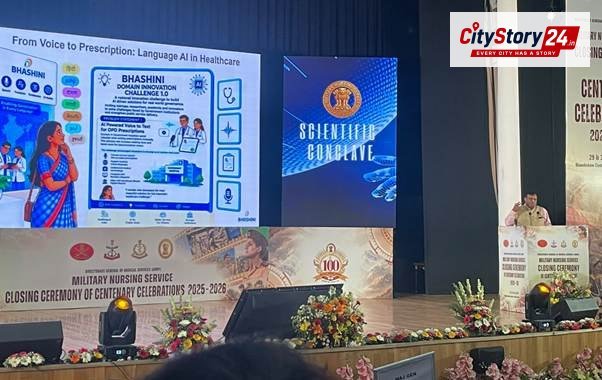
- A voice-to-text tool for OPD prescriptions was highlighted among the showcased solutions
- General Dhiraj Seth was chief guest; MNS Diary and Nursing Research Compendium released
- BHASHINI supports 36 text languages, 23 voice languages and 35 international languages
Language data is key to healthcare AI, BHASHINI’s CEO told a Military Nursing Service conclave in Delhi Cantt. Amitabh Nag said technology must understand how patients actually speak to be useful.
The Military Nursing Service (MNS) held the scientific conclave at Manekshaw Centre as a closing event of its Centenary Year 2026. Senior leaders, nurses, healthcare practitioners and technology firms discussed how digital tools can strengthen care and nursing work.
Keynote: digital health and language
Nag gave the keynote at the inaugural session, speaking on the future of digital health. He said language, local context and healthcare-specific data are needed to build tools that are accurate and easy to use for patients and staff.
He described the four pillars of BHASHINI and its growing use in healthcare. Speech, translation and other language technologies can cut communication gaps and make health services more inclusive across India’s many languages.
General Dhiraj Seth, Chief of the Army Staff, was chief guest at the inaugural session. The MNS Diary and the Nursing Research Compendium were released there, and a digital souvenir, Digital Pulse of Nursing, was launched online.
Glossaries and voice tools
Nag stressed the need for medical and nursing glossaries as base language resources for AI in healthcare. Doctors use fixed terms, but patients describe symptoms in everyday words, and the same illness can be named differently across regions and languages.
A good glossary can link clinical terms with everyday speech. That shared layer would help professionals, patients and AI systems understand each other, he said.
He also spoke of the BHASHINI Domain Innovation Challenge in Healthcare, which backs tech solutions for communication problems in care. One showcased solution was an AI-powered voice-to-text tool for OPD prescriptions, which can speed up documentation.
Nag said voice-first and multilingual tools can narrow the gap between technology and daily clinical work, especially when patients and doctors use different vocabularies.
Speaking on compassionate care, he said that care and compassion matter most when people are addressed in a language they understand.
About BHASHINI
The Digital India BHASHINI Division (DIBD) operates under the Digital India Corporation (DIC) of the Ministry of Electronics and Information Technology (MeitY). It is India’s national platform for AI-powered multilingual digital inclusion.
BHASHINI powers more than 800 government websites. It has enabled over 9 billion cumulative AI inferences and processes more than 24 million AI inferences daily. It supports 36 Indian text languages, 23 Indian voice languages and 35 international languages.