
- Enumeration completed in 5,292 blocks in snow-bound areas of Jammu & Kashmir and Ladakh
- Ladakh is the first Union Territory in India to finish Census 2027 population enumeration
- Kishtwar is the first district in the country to complete enumeration for Census 2027
- Doda recorded the highest number of completed blocks in Jammu & Kashmir, at 798
- Remaining non-snow-bound areas of Jammu & Kashmir are scheduled for February 2027
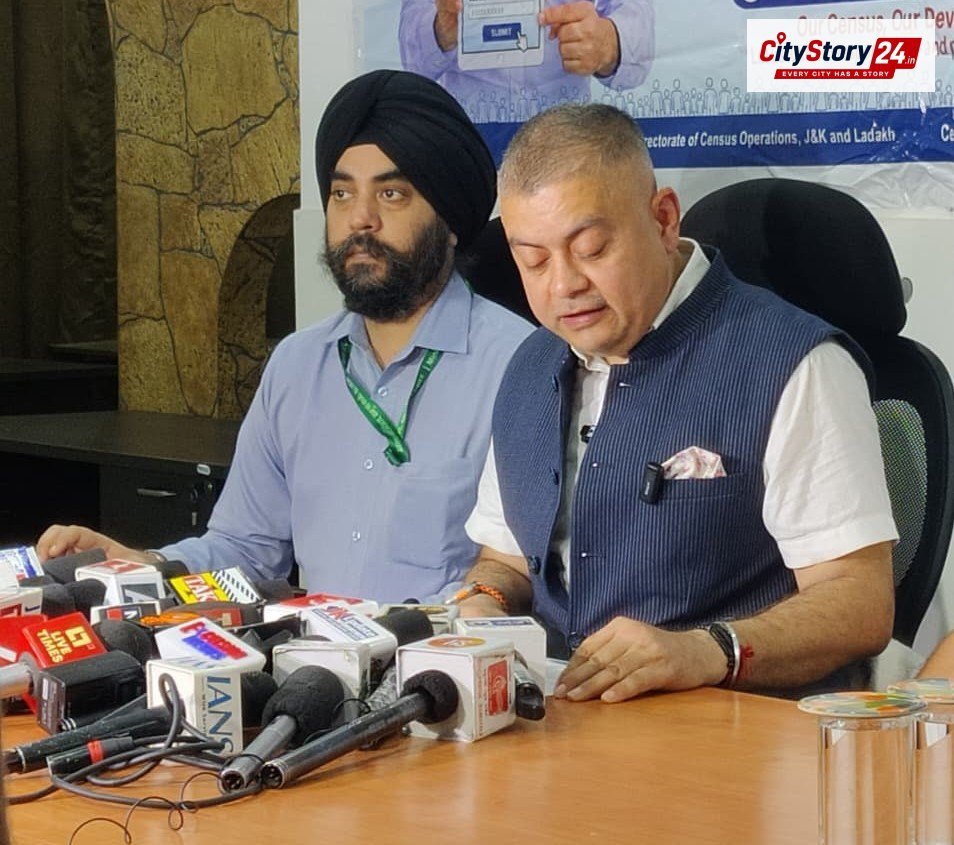
Ladakh has become the first Union Territory in India to finish population enumeration for Census 2027, Chief Principal Census Officer Amit Sharma said at a press conference.
Snow-bound blocks covered
Enumeration has been completed in 5,292 blocks in the designated snow-bound areas. Of these, 4,597 are in Jammu & Kashmir and 695 in Ladakh.
The work covered remote and hard-to-reach areas. It needed detailed preparation, special field arrangements and close coordination with district administrations and Special Charges.
Sharma, who is also Director Census Operations for Jammu & Kashmir and Ladakh, called the completion a major milestone for Census 2027.
Self-enumeration ran from 17 to 31 August 2026. Field enumeration followed from 1 to 30 September 2026.
In Ladakh, the September exercise covered the whole Union Territory. All 695 blocks were completed, with 367 in Leh and 328 in Kargil.
District-wise progress
In Jammu & Kashmir, the snow-bound enumeration covered 16 districts and 95 Charges. Completed blocks by district were:
- Doda: 798
- Kishtwar: 602
- Ramban: 418
- Anantnag: 377
- Baramulla: 359
- Reasi: 345
- Udhampur: 313
Kishtwar was declared fully snow-bound. It is the first district in the country to complete enumeration for Census 2027.
Sharma thanked district administrations, Census staff, Special Charges, enumerators, supervisors and residents for their cooperation. He said the result reflected the readiness of the Census machinery in difficult terrain.
Special Charges, outreach and officials’ visits
Enumeration was completed in 125 Special Charges of Defence and CAPFs in snow-bound Jammu & Kashmir. In Ladakh, 47 Special Charges were covered. Paper schedules were used there, and queries were resolved in real time. Digitisation of the collected data is under way.
The public outreach included newspaper advertisements, publicity vans with LED screens, banners at J&K Bank branches and pamphlets. It also featured a seminar at the Bhaderwah Campus of the University of Jammu, a quiz in Kishtwar and radio jingles in Hindi, Urdu, Kashmiri and Dogri. Hoardings were placed at district headquarters and bus stands.
Registrar General and Census Commissioner of India Mritunjay Kumar Narayan visited Jammu & Kashmir in August and Ladakh in September. Additional Registrar General Sunil Kumar visited Jammu & Kashmir in August. Both expressed satisfaction with the preparations and field work.
The Registrar General’s office also sent observers to monitor the snow-bound enumeration. They reported that the exercise ran smoothly.
What comes next
Enumeration in the non-snow-bound areas of Jammu & Kashmir is set for February 2027. Ladakh will not be part of that schedule. The Directorate will carry out post-enumeration work in the areas already covered.
Work on the District Census Handbook is also moving ahead in both Union Territories. Training was completed in all districts by 27 September 2026, and fieldwork is due by 30 October 2026. Jammu & Kashmir has 284 Charge Officers, 65 Town Officers and 2,854 Village Officers on the task. Ladakh has 17 Charge Officers, 2 Town Officers and 56 Village Officers.
About ₹49.2 crore has been released to the districts for IT infrastructure, POL, contingency, honorarium and training allowances.
Sharma said the focus now shifts to data quality, completeness and procedures. Final population figures for Ladakh and the snow-bound areas of Jammu & Kashmir will feed into the national Census results. Those are due after the overall exercise ends, in March to April 2027.