

इस खबर का हिंदी अनुवाद तैयार किया जा रहा है। यह पेज कुछ ही क्षणों में अपने आप हिंदी में खुल जाएगा।
- Ministry of Textiles' CCI showed cotton reforms at 'Reform Utsav 2026' in Hyderabad
- Kapas Kisan App, CotBiz and Mission for Cotton Productivity – Kapas Kanti were showcased
- QCOs on cotton removed to help textile mills get raw material
- Akola farmer said HDPS cuts labour needs and cultivation costs
- Central Silk Board showed Silkmark digitisation and Seri Tourism initiatives
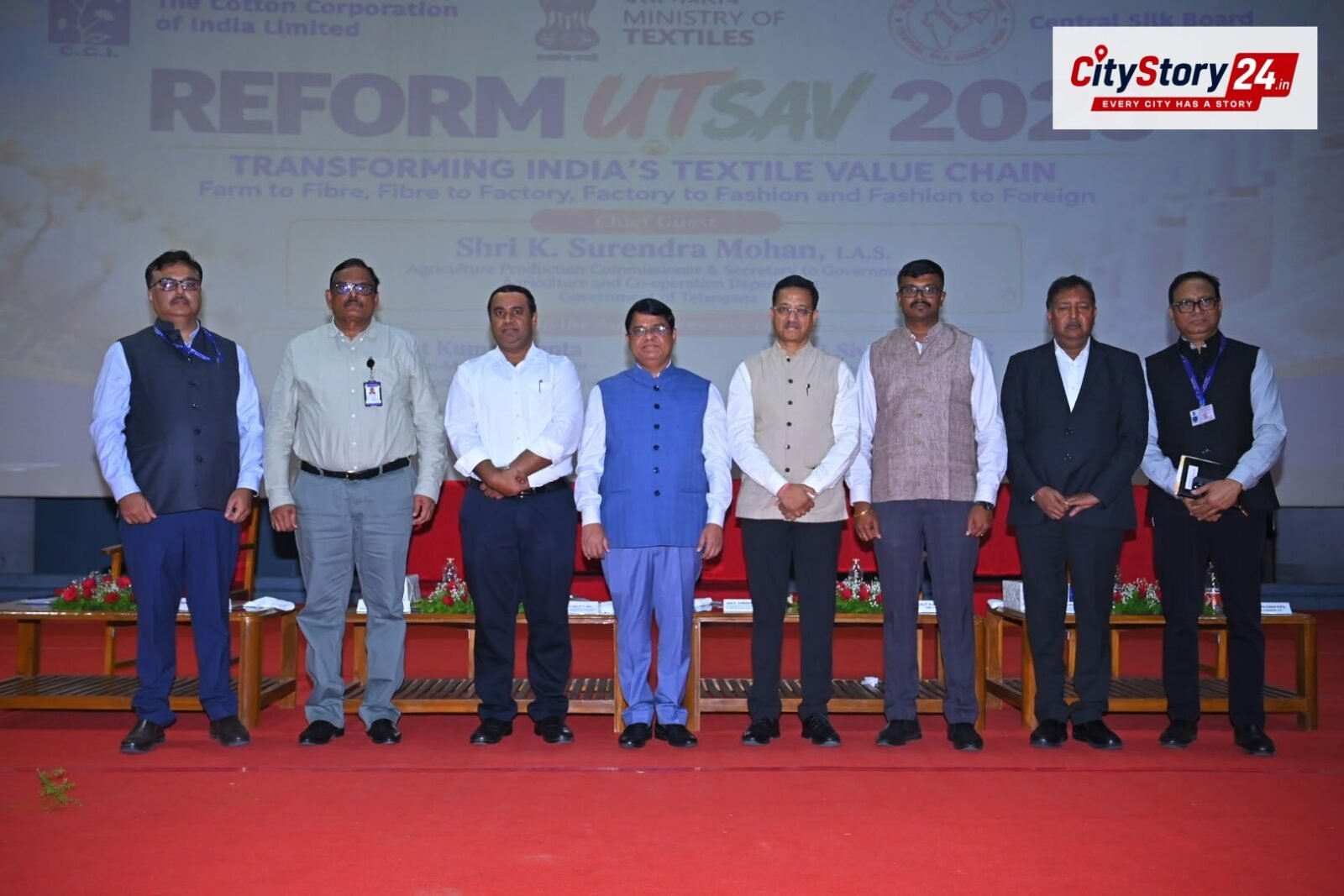
The Ministry of Textiles, through its public sector undertaking, the Cotton Corporation of India Ltd (CCI), held a showcase event in Hyderabad, Telangana. The event highlighted reforms meant to help cotton farmers and make the cotton value chain easier to do business in.
K Surendra Mohan, Agricultural Production Commissioner and Secretary to the Government, Agriculture and Cooperation Department, Telangana, was the Chief Guest. Lalit Kumar Gupta, Chairman-cum-Managing Director of CCI, and other officials also attended. Cotton farmers and industry representatives took part.
Digital tools and productivity
Short films showed the main reforms. These included the Kapas Kisan App, which helps farmers engage digitally and gives access to procurement information.
The films also covered the Mission for Cotton Productivity – Kapas Kanti, which aims to raise cotton yield and quality. Another film showed the removal of Quality Control Orders on cotton, which makes raw material easier for the textile industry to get. CotBiz, a digital system for cotton bale and seed billing, was also shown.
Mohan said coordination among government bodies, agricultural agencies, industry and farmers is needed. He backed HDPS and called for policy support to adopt it across Telangana.
Farmers and industry share ground experience
A progressive farmer from Akola described his experience with the High-Density Planting System (HDPS). The system has grown from 5,000 hectares to around 30,000 hectares in the district. Potential yields could rise from 12 to 18 quintals per acre.
He said HDPS helps with labour shortages and mechanisation. It also improves weed control and cuts cultivation costs compared with conventional methods.
Rahul Raj P S, Special Commissioner for Cooperation, spoke on cotton procurement under the Minimum Support Price framework. M. Balram, Director of Research at Professor Jayashankar Telangana Agricultural University, stressed scientific farming and closer work between universities, agencies, farmers and industry.
Industry speakers also took part. Bommineni Ravinder Reddy, President of the Telangana Cotton Millers and Traders Welfare Association, spoke on ginning and pressing. Uday Kharat of TEXPROCIL showed the Kasturi Cotton Bharat programme for quality, certification, branding and traceability. Dhiraj Khetan, Managing Director of Sri Salasar Balaji Textiles Private Limited, shared a spinning mill’s view of Kasturi Cotton quality.
Silk sector initiatives
The Central Silk Board (CSB) also showcased its work. Naresh Babu N, Joint Secretary (Technical) and CEO of Silkmark Organisation of India, presented Silkmark digitisation and Seri Tourism. Vishaka G. V, Scientist C at CSB, presented the ‘Mera Resham Mera Abhiman’ (MRMA) initiative.
The organisers said the event gave policymakers, farmers, industry and technical institutions a chance to talk directly. They said the aim is a more productive, resilient and globally competitive textile sector, from farm to fibre, fibre to factory, factory to fashion and fashion to foreign.