

Source: Press Information Bureau (PIB), Government of India — Ministry of Jal Shakti · PIB Delhi · Read the original release on pib.gov.in
- Shri C.R. highlighting Prime Minister Shri Narendra Modi's vision of including water in education during the Departmental Summit on Water. Patil took this vision forward at the 20th ETF meeting; Water-related courses in schools, water-specific subjects in engineering and technical universities and water management and administration courses in higher educational institutions were made mandatory.
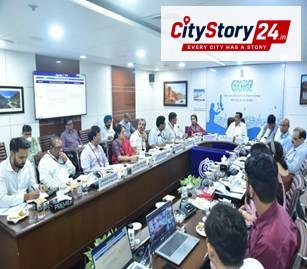
Strengthening the Government's overall commitment towards river conservation, Union Jal Shakti Minister Shri C.R. Patil on Ganga conservation under the chairmanship of Empowered Task Force (ETF) 20th meeting in new delhi were held. In this meeting, the progress of Namami Ganga program was reviewed and key measures aimed at accelerating river conservation were discussed. These measures include improved sewerage infrastructure, scientific water management, safe reuse of treated waste water, ecological restoration, groundwater management, nature-based solutions and better coordination among stakeholders.
The meeting was attended by Minister of State for Jal Shakti, Shri Raj Bhushan Choudhary along with key stakeholders from various ministries and state governments. These include Mrs. Archana Verma, Secretary, Water Resources Department; Secretary in the Department of Drinking Water and Sanitation, Shri Ashok K.K. Meena; Shri Rajiv Kumar Mittal, Director General, National Mission for Clean Ganga (NMCG); JS&FA of Water Resources Department Shri Gaurav Masaldan; and senior officials from NMCG and partner states.
Status of sewage infrastructure at the meeting, DPR preparation and evaluation, availability of land, Safe Reuse of Treated Waste Water (SRTW), aquifer mapping, wetland, City Sanitation Action Plan (CSAP), Aerial drainage mapping and regular meetings of State Ganga Committees were reviewed. It was informed that the revised DPR for Barauni Sewage Treatment Plant (STP) has been received and sent to IIT-BHU for evaluation, while the DPR for Shantipur STP, West Bengal has been approved by the Executive Committee. Bihar and West Bengal have notified their policies on reuse of treated waste water, while Jharkhand is in the process of receiving state cabinet approval.
In this meeting, the overall status of the projects under Namami Ganga Program and the performance of this program during the financial year 2025-26 was reviewed. By August 2026, Total 43,266 At a cost of Rs crore 527 Projects have been approved, of which 368 Projects have been completed. Under sewerage infrastructure, 219 Projects have been approved, from whom 6,603 mld healing ability and 5,245 kilometer Sewer network has been constructed. of these 147 Projects have been completed, from which 4,339 Sewage treatment capacity of MLD And 4,615 kilometers of sewer network has been built. Namami Ganga program also includes programs related to bioremediation and innovative sewage treatment, solid waste management, industrial waste treatment, monitoring and supervision, research and development, biodiversity and tree plantation, livelihood generation, public awareness and knowledge management. The Union Minister stressed the need to maintain the pace of implementation and directed the concerned agencies and State Governments to ensure timely completion of ongoing projects and prompt action on pending DPRs, land related issues and other implementation related bottlenecks.
in this meeting River City Academic courses developed under the alliance were also reviewed, which are in line with the direction to develop water related courses and include water governance and management in the curriculum of higher education. NMCG and NIUA have launched two courses – Principles of Urban River Management And eco-friendly coastal development Have prepared and operated it. The first course is being taught at Mitraj Sarvajanik Vishwavidyalaya (formerly SCET Surat) and OP Jindal Global University, while the second course is being taught at the School of Planning and Architecture, Bhopal. These courses include areas such as watersheds, drainage basins, river structure, storm water management, environmental flows, eco-friendly river bank design, basin-city relations, flood zone regulation, river bank ecology, water sensitive urban design and climate adaptation.
The main focus of this meeting Conservation of Gomati source place in Pilibhit, Uttar Pradesh Was. The master plan for restoration and integrated development of Gomati source site was approved in the 68th Executive Committee meeting of NMCG held in December 2025. It was informed in the meeting that Lake restoration and 1 MLD to submit DPR related to sewage treatment through natural solution based STP. 17 september 2026 has been approved with administrative approval and expenditure approval. Tortoise Habitat and Panchvatika The DPR related to the renovation of the DPR is being considered in the 74th Executive Committee, while the DPR related to the infrastructure development is under examination. The Union Minister advised that the implementation of the approved measures be initiated without any delay and stressed the need for timely completion of the tender process and formation of a State Level Steering Committee.
In this meeting Niranjana/Phalgu river in Bihar The proposed revitalization of the river was also reviewed, which includes interventions aimed at improving the river ecosystem and increasing water availability through measures such as afforestation, groundwater recharge and recharge ditches. Following the letter issued to the Chief Secretary of Bihar Government, To the Secretary in the Water Resources Department of Bihar Niranjana has been designated as the State Level Nodal Officer for the Revival Initiative. NMCG has requested the State Level Nodal Officer to, in consultation with all concerned State Departments Bill of Quantities (BOQ) and detailed cost estimates Check and confirm the rates, which includes verification of quantities, items and rates as per the latest applicable Schedule of Rates (SOR). The State has been requested to submit confirmation at the earliest to facilitate further approval of the project and implementation at the ground level. Shri C.R. Patil has Integrated approach to river conservation Emphasized the importance of adoption. In this, ecological restoration should be combined with measures aimed at groundwater management and increasing water availability.
In the drawing room Conservation of Yamuna River The status of NMCG related initiatives was also reviewed. In Uttar Pradesh, NMCG Mathura-Vrindavan, kosi-chatta, Agra, Firozabad and Etawah The projects have been approved by the Government of India, aimed at strengthening sewage collection, transportation, treatment and management infrastructure and reducing the discharge of untreated or inadequately treated sewage into the Yamuna and its associated water streams. In Delhi, apart from waste water management initiatives, these include formation of Yamuna Ecological Task Force, wetland related initiatives, preparation of Urban River Management Plan for Delhi, drone-based survey of drains, nature-based solutions, monitoring of pollution-related flows, highly polluting industries and interceptor sewerage project. This also includes enhancing environmental flows into river Yamuna through Coronation Pillar and Okhla STP.
The Union Minister emphasized that such educational initiatives Ecology of River Management, Social, cultural, economic and policy dimensions Can contribute to creating a strong knowledge base and a pool of professionals capable of making improvements. It was also pointed out that these courses for river management professionals and students can be promoted at the city and state level, and students completing these courses can be considered for river related work in cities.
The meeting also reviewed the major public relations and public participation initiatives undertaken since the 19th ETF meeting. cleanliness is service 2026 Under this, cleanliness drives, awareness campaigns and community engagement activities were conducted at various places. Union Jal Shakti Minister Water conservation and river conservation activists across the country Also interacted with and appreciated their grassroots efforts towards water conservation, environment protection, river conservation and community mobilization. The Union Minister praised the contribution of these grassroots level workers and emphasized that sustained and targeted public participation is essential to transform river conservation efforts into long-term and community-led action.
in this meeting July and August 2026 New Delhi during, Pune and Guwahati held in National level consultation workshops on small river conservation framework Reviews were conducted, which focused on scientific planning, nature-based solutions, groundwater recharge, environmental flows and community participation. The objective of these workshops was to strengthen a systematic and scientific approach to revitalization of small rivers and waterways incorporating local ecological conditions and community knowledge.
9th India International Water Week 2026 during, Sustainable Urban River Management (SURM) Framework And Protocol for monitoring micro plastics in river were also launched/released to strengthen sustainable river-city management and scientific monitoring of river pollution. These initiatives aim to help cities and river authorities adopt sustainable approaches to urban river management and strengthen scientific monitoring of emerging pollution challenges, including microplastics in rivers.
world river day On occasion, 137 CETF Battalion (TA) 39th Ganga Task Force Prayagraj, Varanasi, Kanpur, Lucknow and Delhi Awareness campaigns and cleanliness campaigns were conducted in major riverine coastal areas, which further strengthened public participation in river conservation. To achieve the objectives of river conservation in the 20th meeting of the Empowered Task Force central ministries, state governments, urban local bodies, Scientific institutions and local communities The importance of constant coordination between the
Shri C.R. Patil stressed that river conservation requires a holistic approach that goes beyond pollution control. water availability, ecological health, groundwater security, biodiversity conservation, Sustainable urban development and community participation Include. He called for continuous coordination and close monitoring at all levels to ensure concrete results on the ground.
In the 20th meeting of the Empowered Task Force on Ganga Rejuvenation, it was reiterated that continuous and coordinated efforts should be made in the Ganga Basin. uninterrupted and clear Ganga will remain central to strengthening the vision of watershed management as well as pursuing long-term water security, ecological resilience and sustainable development in the river basin.
This is the official press release issued by the Press Information Bureau (PIB), and is published without changes.