- Modi called for an open, secure, rules-based maritime order in his message to the Dialogue
- Union Minister Sarbananda Sonowal presented Maritime Amrit Kaal Vision 2047 as India's partnership offer
- Delegations from Korea, the EU, Australia, Norway, UAE, Bhutan and Africa joined on day one
- India-EU Green Shipping Corridor coalition formally launched at a session with RMI
- Sagarmanthan 2026 continues with further ministerial and expert sessions
The third edition of Sagarmanthan: The Great Oceans Dialogue opened today, with Prime Minister Narendra Modi urging a maritime system that is open, secure and governed by rules. The event is organised by the Ministry of Ports, Shipping and Waterways (MoPSW) with the Observer Research Foundation (ORF).
Modi’s message: oceans link nations
In his message, Modi said Indian tradition sees the churning of the ocean as a source of new possibilities. He traced India’s sea heritage from Lothal to the Cholas, and cited the naval vision of Chhatrapati Shivaji Maharaj.
He warned that a development in one part of the world can affect places far beyond its coasts. For that reason, he said, dialogue and cooperation matter more than ever.
Sonowal sets out India’s offer
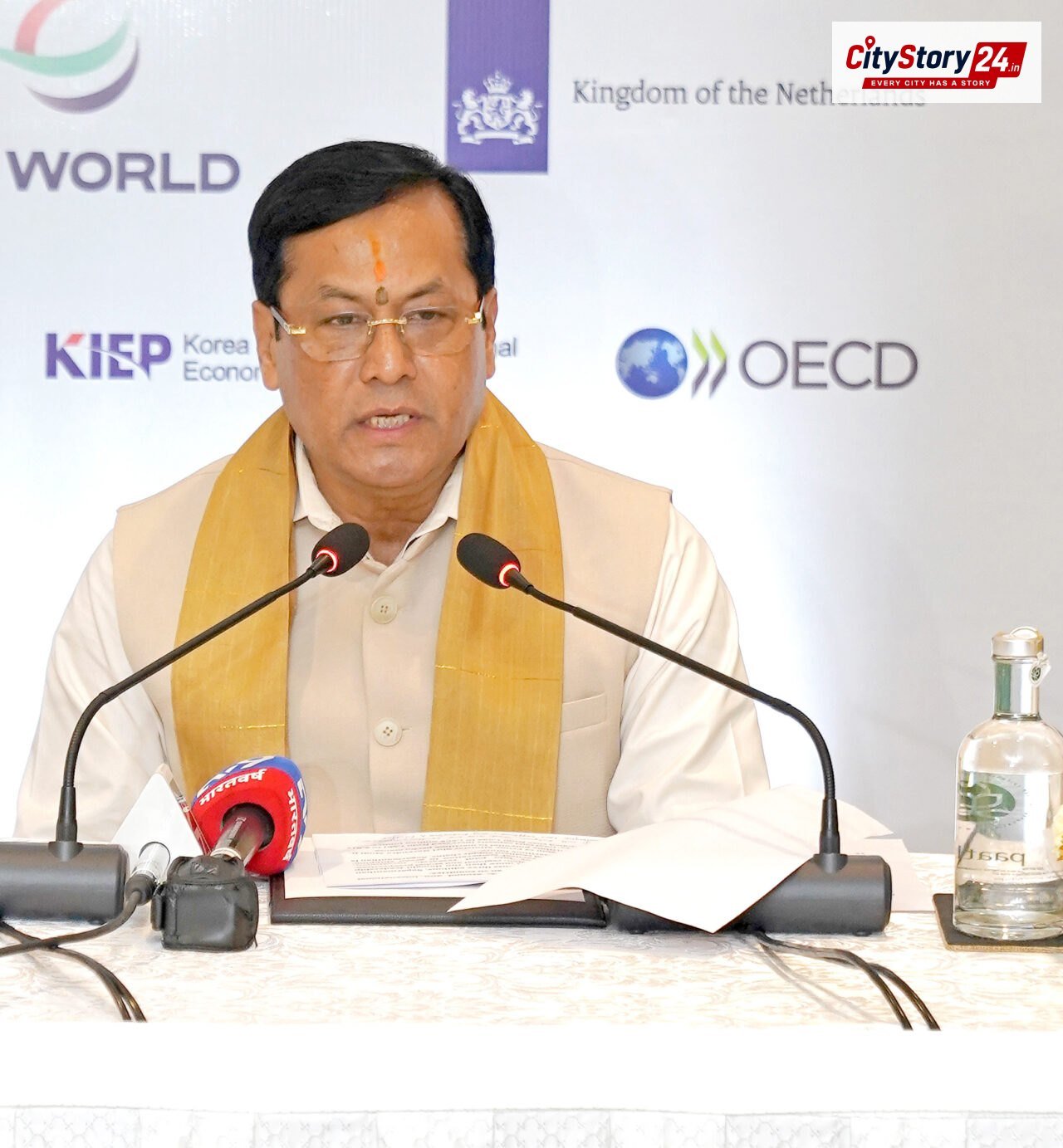
Union Minister of Ports, Shipping and Waterways Sarbananda Sonowal described a global maritime order built on trust, shared prosperity and partnership, with India acting as a guide and anchor.
He presented Maritime Amrit Kaal Vision 2047 as India’s offer to the world. He tied it to PM Gati Shakti and the Sagarmala programme, and said the gains were meant for partners as well as for India.
In a conversation with ORF President Dr. Samir Saran, Sonowal called India a Vishwaguru on the oceans, a country ready to share its knowledge, capacity and talent.
Ministers, navies and firms on day one
Ministers, naval leaders, port authorities, shipbuilders, financiers and multilateral bodies from five continents took part. Delegations came from Australia, Belgium, Bhutan, the European Union, France, Norway, the Republic of Korea, the UAE, Nigeria, Ethiopia, Ghana, Egypt, Seychelles and Ecuador.
The OECD, UN Trade and Development, the Asian Infrastructure Investment Bank and the African Union also joined the discussions.
Union Minister of State Shantanu Thakur said India’s port-led development and new maritime laws are building capacity across the wider region. He said India’s major ports have nearly doubled their capacity. Vijay Kumar, Secretary, MoPSW, gave the opening address.
The inaugural plenary on ports and partnerships featured Kevin Rudd, Annick De Ridder, Chandra Bahadur Gurung, Admiral Krishna Swaminathan and Rizwan Soomar of DP World.
Green corridor and India-Korea ties
The India-EU Green Shipping Corridor aims to link India’s green fuel potential with European demand for green ammonia and methanol. A pre-feasibility study was launched in 2025, and an industry coalition was set up in 2026.
At a session with RMI, the coalition was formally launched. Apostolos Tzitzikostas, Commissioner for Sustainable Transport and Tourism at the European Commission, addressed the session.
A roundtable with the Korea Institute for International Economic Policy (KIEP) reviewed progress since the April 2026 India-Republic of Korea Summit. It focused on shipbuilding, shipping and maritime logistics. The session also launched the edited volume Oceans of Alignment: India-South Korea Cooperation in the Indo-Pacific.
Other sessions covered the IMEC corridor, OECD blue economy measurement tools, and Africa’s maritime corridors, including the Lobito Corridor. Sagarmanthan 2026 will continue with further ministerial and expert sessions.