
Source: Press Information Bureau (PIB), Government of India — Ministry of Agriculture & Farmers Welfare · PIB Gangtok · Read the original release on pib.gov.in
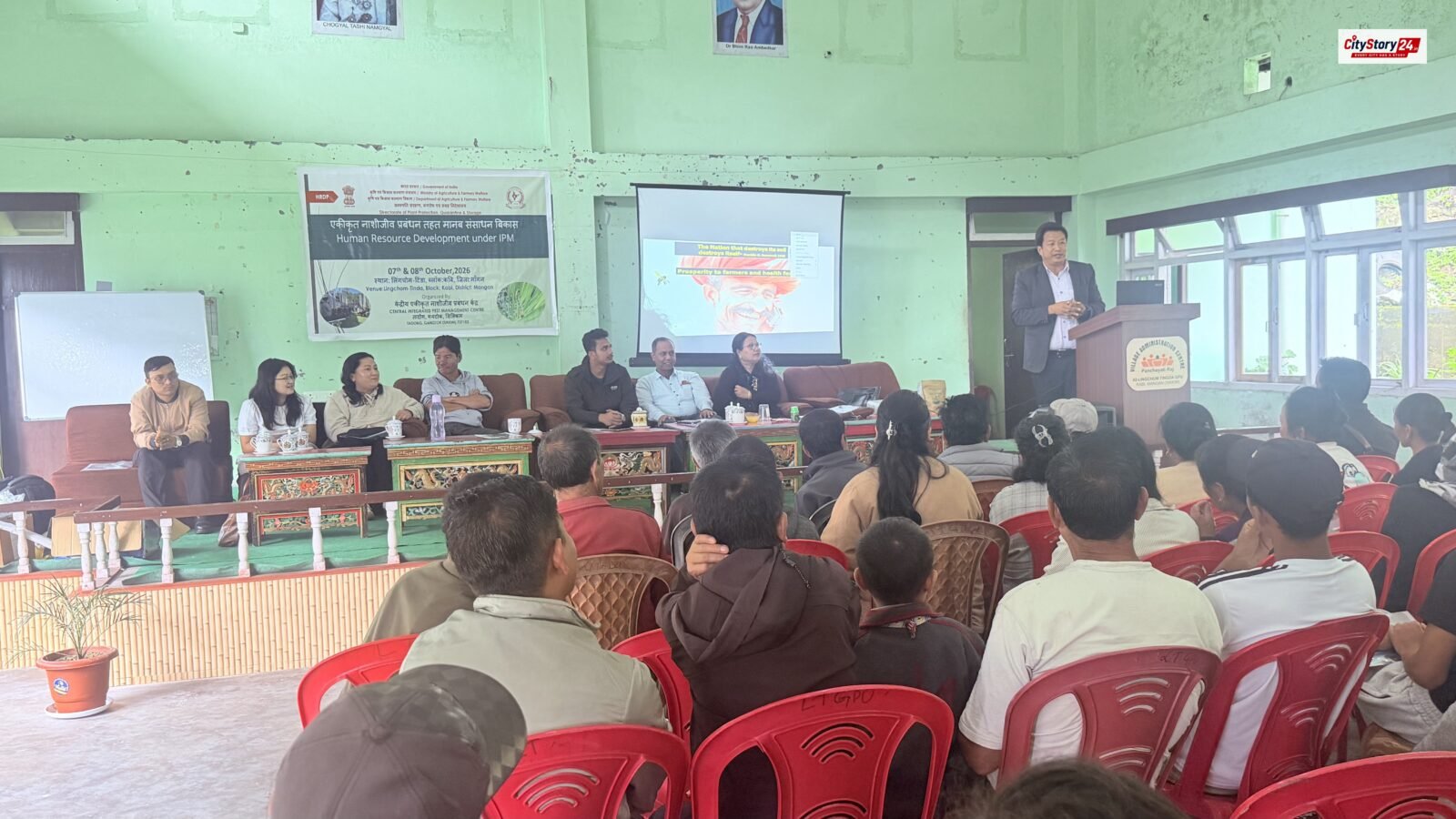
Integrated Pest Management (IPM) techniques are of utter importance to promote non-chemical pest management of crop insect pests, diseases, weeds and nematodes and only pathway towards sustainable organic farming. A two-day Human Resource Development (HRD) Programme on Integrated Pest Management (IPM) was organised on 7th –8th October 2026 by Central Integrated Pest Management Centre (CIPMC), Gangtok at Lingchom-Tingda, Block- Kabi, Mangan District, Sikkim, with the participation of 55 farmers and staff of the State Government departments, to promote sustainable and eco-friendly crop protection practices.
On 7th October, Shri Roman Lepcha, Assistant Director and Officer-in-Charge, CIPMC, Gangtok, sensitised participants on Integrated Pest Management and its importance in sustainable agriculture. Dr. S. S. Bora, Scientist of Spices Board, Gangtok delivered a session on major insect pests and diseases affecting vegetable crops and their management. Smt. Pavitra Tamang, Plant Protection Officer, highlighted the role of natural enemies in biological pest management. Shri Kausar Ahamed, Assistant Plant Protection Officer, explained the National Pest Surveillance System (NPSS) mobile application and its use in pest surveillance and reporting.
On 8th October, practical field demonstrations were conducted on seed treatment, pheromone trap installation, identification of Major pests of field crop, and the use of sweep nets for monitoring insect pests. The programme strengthened participants’ technical knowledge and capacity to adopt integrated, sustainable and effective crop protection practices.
This is an official press release issued by the Press Information Bureau (PIB), reproduced as issued.